


Palace of Parliament Building
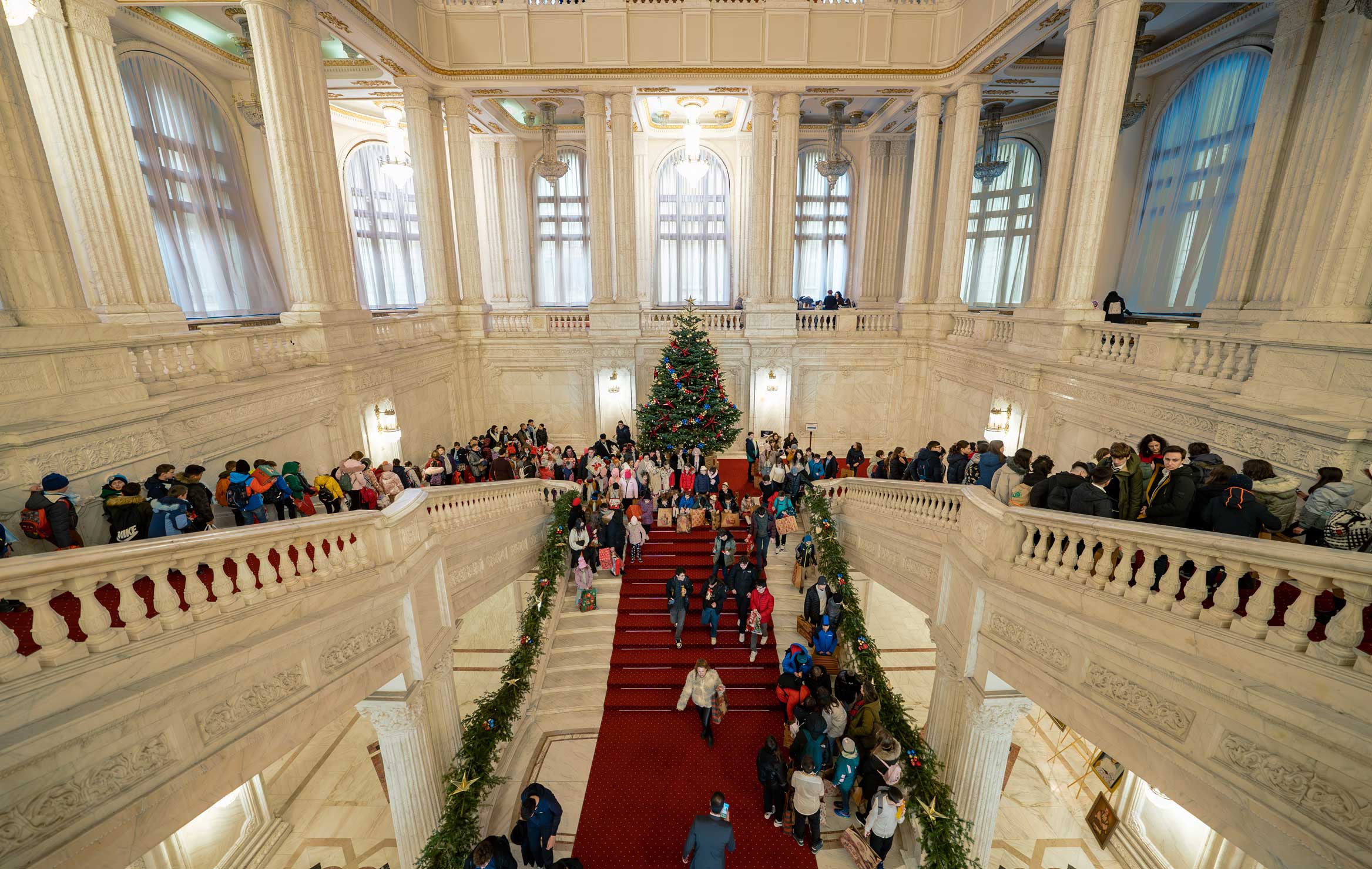
The Palace of the Parliament was known, before 1989, initially as the People's House, then the Republic House. Located on Arsenal Hill, the building has maximum ground dimensions of 275 by 235 meters, a height of 84 meters (above ground level), and the built-up area on the ground floor covers approximately 66,000 m2.
Palace of Parliament – The Marble Giant of Bucharest
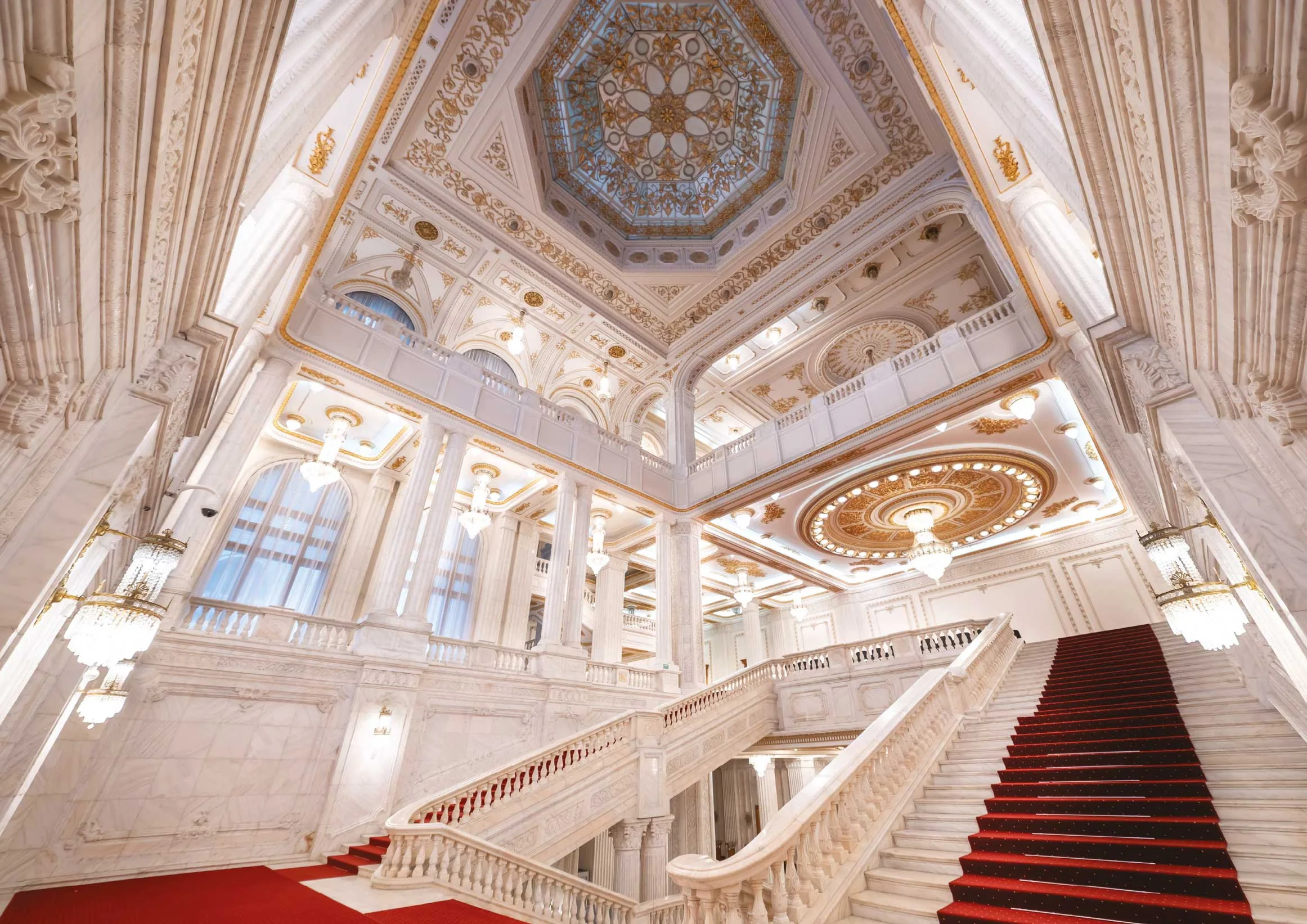
The palace has 12 levels, around 1000 rooms, and the surface area is approximately 365,000 m2. The Palace of the Parliament is listed in the “Book of Records”, in the “Administrative Buildings” chapter, in second place in the world, after the Pentagon building. For the construction and interior design, approximately 1,000,000 m3 of marble, 5,500 tons of cement, 7,000 tons of steel, 200,000 m3 of glass and 220,000 m2 of carpets were used. The building can be seen from any point in Bucharest, and from the roof you can see the Carpathian Mountains and the Danube River.
From the history of the Senate
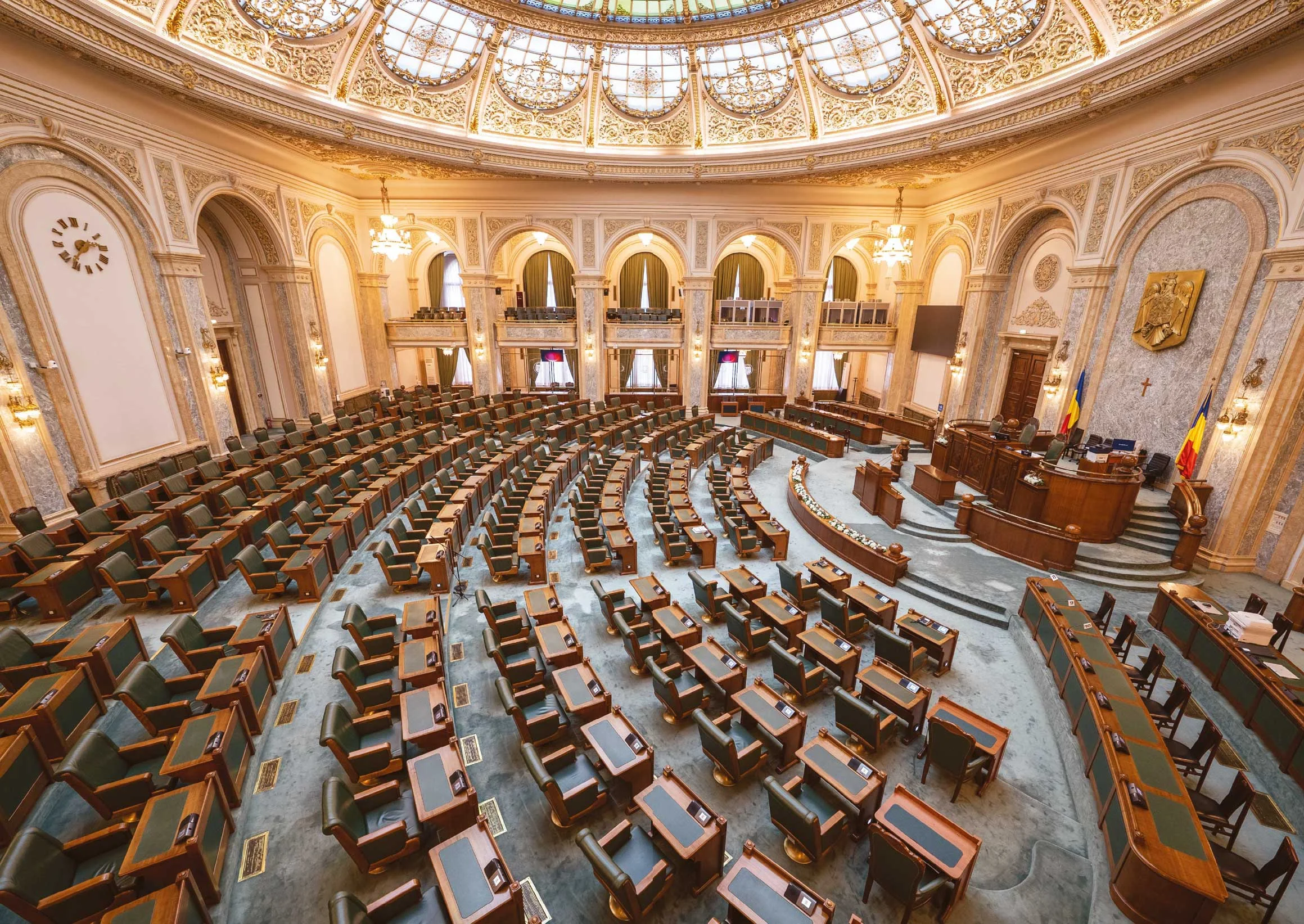
The Senate appeared on the political scene in our country at the initiative of Prince Alexandru Ioan Cuza, in 1864, when the Romanians voted, by plebiscite, on a document with constitutional value – the “Statute developing the Paris Convention of 1858”. The statute provided for the establishment, alongside the Assembly of Deputies, of a new parliamentary chamber, the Senate. The first Senate of Romania functioned as a “weighing body”, acting as a balancing factor between the powers of the state. It was then composed of members by right (heads of the church and of some public authorities) and members appointed by the prince (representatives of the counties and high-ranking state officials).
By the 1866 Constitution, the Senate became an elected body based on the census vote (an electoral system under which only citizens who earned a certain annual income had the right to vote), but it also included several ex officio members: the heir to the throne and the leaders of the church. At that time, two people from each county were elected to the Senate for a term of eight years, half of their number being renewed every four years. Also, the universities of Bucharest and Iași had the right to elect one representative of their own to the Senate.
According to the 1923 Constitution, the Senate and the Assembly of Deputies became representative bodies elected by universal suffrage. The interwar Senate was composed of senators by right – representatives of religions, persons who had held important public offices – and senators elected for a four-year term. Some senators were elected by universal and direct suffrage, in electoral districts, while others were elected by local councils, by professional chambers (commerce, industry, labor and agriculture) and by the teaching staff of the universities of Bucharest, Iași, Cluj and Cernăuți.
King Carol II imposed a new Constitution in 1938, introducing an authoritarian monarchy, amid deep internal political tensions and external threats. The new Constitution provided, alongside the senators by right – which included members of the royal family – a category of senators appointed directly by the king and another of senators elected on the basis of a corporatist system (the electoral body was divided into three categories, according to the criterion of professional activity: agriculture and manual labor, commerce and industry, intellectual occupations). Under the regime of the royal dictatorship, Parliament became a decorative body, deprived of its main attributes. The Senate was subordinate to the executive power, and the king decided on major issues through decree-laws.
After the establishment of the military dictatorship in the autumn of 1940, the activity of the Senate and the Assembly of Deputies was suspended. Under pressure from Soviet and communist forces, the Senate was abolished by a decree in July 1946. The Parliament was reorganized into a single legislative body, the Assembly of Deputies, an institution that was transformed, by the 1948 Constitution, into the Great National Assembly, a body totally subordinate to the communist power.
The December 1989 revolution paved the way for Romania’s return to a genuine democratic regime, based on free elections and political pluralism, on respect for human rights, on the separation of powers and the accountability of the rulers to representative bodies. In the spring of 1990, the Senate was re-established, thus marking the country’s return to the tradition of a truly representative bicameral Parliament, in accordance with the standards of the rule of law. On May 20, 1990, the Senate and the Chamber of Deputies were freely and democratically elected, which also functioned as a Constituent Assembly, with the mission of drafting the new Constitution, approved on December 8, 1991, by national referendum. In October 2003, the Constitution was revised to bring its provisions into line with the new socio-political realities and the imperatives of the European integration process.
Plan
an event
an event
Discover the spaces of the Palace of Parliament and the unique experience of the Romanian Senate.
Whether you are organizing a conference, a seminar, a reception or want a guided tour, we are ready to assist you at every stage.
Schedule
a visit
a visit
Discover the spaces of the Palace of Parliament and the unique experience of the Romanian Senate.
Whether you are organizing a conference, a seminar, a reception or want a guided tour, we are ready to assist you at every stage.